
Aadhar Card New Update 2026: The Aadhaar card has quietly evolved from a voluntary identity proof into the backbone of India’s digital governance system. What began as a way to ensure targeted delivery of welfare benefits is now deeply embedded in daily life from opening a bank account and filing taxes to buying a SIM card or enrolling a child in school. With over 1.3 billion Aadhaar numbers issued, even small changes in the system can affect millions at once.
Against this backdrop, discussions around the Aadhaar Card Update 2026 have gained momentum. While no single notification has spelled out every detail yet, officials and policy experts suggest that UIDAI is preparing a more robust, tech-driven framework. The focus appears to be on tightening verification, reducing identity fraud, and making digital authentication faster and more reliable. For ordinary citizens, this could mean new rules, new checks, and a different way of proving identity in the coming years.

Why the Aadhaar system is being reworked now
The push for change did not happen overnight. Over the past few years, banks, telecom companies, and government departments have reported growing instances of identity misuse, including duplicate Aadhaar numbers, biometric spoofing, and fraudulent KYC processes. While Aadhaar itself has remained largely secure, the ecosystem around it agents, devices, and third-party operators has shown vulnerabilities.
At the same time, India’s digital economy has expanded rapidly. With UPI payments, direct benefit transfers, and online public services becoming the norm, Aadhaar verification is happening more frequently than ever before. According to a former UIDAI technical advisor, “When a system becomes central to everything, even small loopholes can have large consequences.” The 2026 update is widely seen as a response to these structural pressures.

What the Aadhaar New System 2026 could look like
Early indications suggest that the Aadhaar New System 2026 will rely more heavily on digital-first verification tools. QR code-based authentication, already available in limited form, may become a standard option across banks, telecom outlets, and government offices. This would allow instant verification without sharing the Aadhaar number itself, reducing the risk of data leakage.
Another major shift could involve digital document locking. Aadhaar holders may be encouraged — or required — to keep their identity data locked by default, unlocking it only for a specific transaction. This approach mirrors practices seen in countries with mature digital ID systems. If implemented well, it could make Aadhaar verification both safer and more user-controlled, without adding unnecessary complexity.

Stricter Aadhaar rules and changing update norms
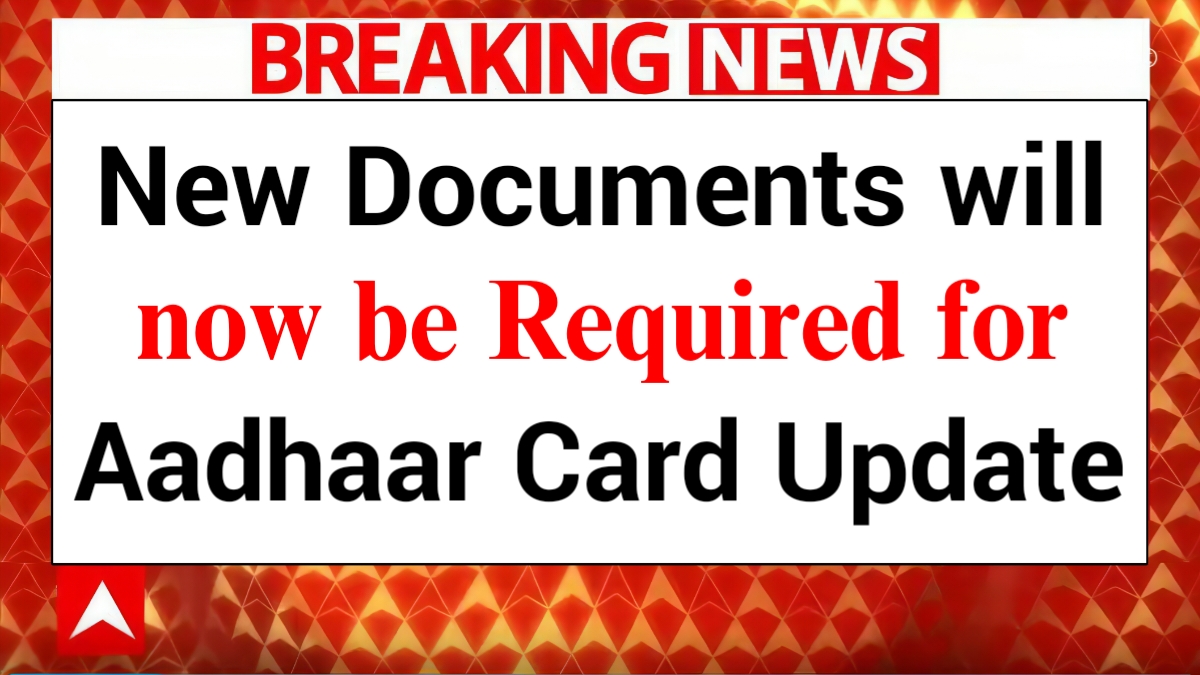
One area where citizens may feel an immediate difference is Aadhaar updates. Today, correcting a name spelling or updating an address can often be done online with minimal documentation. Under the proposed Aadhaar rules 2026, this process may become more stringent, particularly for repeated changes or sensitive fields like date of birth.
Officials argue that stricter norms are necessary to preserve the integrity of the database. “Frequent and poorly verified updates weaken the trust in any identity system,” says a policy researcher tracking UIDAI reforms. For genuine users, this could mean more paperwork initially, but fewer disputes and rejections later when Aadhaar is used for high-stakes services such as banking or property-related transactions.

How the new Aadhaar verification process may work
The Aadhaar verification process in 2026 is expected to move beyond the current OTP-versus-biometric binary. Face authentication, already piloted in select welfare schemes, may be rolled out more widely, especially in cases where fingerprints fail due to age or manual labour. QR-based offline verification could also reduce dependency on real-time internet connectivity.
Importantly, UIDAI is said to be working on fallback mechanisms. For citizens who repeatedly face biometric failures a common complaint among senior citizens and construction workers alternative digital verification routes may be formalised. This would address a long-standing criticism that Aadhaar sometimes excludes the very people it aims to empower.

Biometric lock, fraud prevention, and user control
Aadhaar-related fraud has become a regular headline, particularly involving bank-linked identities and welfare payments. While UIDAI already offers biometric lock and unlock features, awareness remains low. The 2026 update is expected to simplify this feature and integrate it more closely with everyday services.
For example, users may receive prompts to temporarily unlock biometrics only for a specific transaction, after which the system auto-locks again. Cybersecurity experts believe this could significantly reduce misuse. “Most fraud happens not because Aadhaar is weak, but because users don’t actively manage their security settings,” notes a Delhi-based digital security consultant.
Impact on banks, SIM cards, and government schemes
The ripple effects of the Aadhaar Card Update 2026 will be felt most strongly in banking and telecom sectors. Banks may increasingly combine OTP, biometric, and digital QR verification for KYC, especially for high-value accounts. While this could slightly slow down onboarding, it is expected to cut down on mule accounts and financial fraud.
In telecom, digital Aadhaar verification may become the default rather than the exception. This could help authorities trace misuse of SIM cards more effectively. Government schemes, meanwhile, may benefit from cleaner beneficiary databases, ensuring subsidies and benefits reach the intended recipients without duplication or leakage.
What Aadhaar users should realistically prepare for
For most citizens, the changes will not be disruptive if basic details are already accurate. Linking a mobile number to Aadhaar will become even more important, as OTP-based consent is likely to expand. Those who have outdated addresses or name discrepancies may want to correct them sooner rather than later.
Digital literacy will also matter. Tools like the mAadhaar app are expected to play a bigger role, acting as a control centre for verification history, biometric locks, and consent management. As one governance expert puts it, “The future Aadhaar user won’t just carry a number — they’ll actively manage their digital identity.”
Who stands to gain from the Aadhaar 2026 overhaul
If implemented carefully, the Aadhaar 2026 update could benefit both citizens and institutions. Individuals may enjoy faster, more reliable verification with fewer chances of impersonation. Businesses and government departments could save time and money by relying on cleaner, more trustworthy identity checks.
There are also broader policy implications. A stronger Aadhaar framework supports India’s ambitions in digital public infrastructure, from cashless payments to online service delivery. While concerns around privacy and access will continue to be debated, most experts agree that the direction of travel is towards a more secure, user-aware identity system.
Disclaimer: This article is based on publicly available information, policy discussions, and expert insights around proposed Aadhaar updates. Specific features, timelines, and rules may change once official notifications are issued by UIDAI or the Government of India. Readers are advised to rely on official sources for final guidelines and compliance requirements.